L’essentiel à retenir :
Le storing toys optimise l’espace et la sécurité, tout en développant de bonnes habitudes. En moyenne, un cube de rangement contient 12 jouets, facilitant l’organisation selon l’âge et la catégorie. Utiliser des solutions modulables et durables améliore l’accessibilité et l’entretien du coin jeux.
Votre coin jeux ressemble à un champ de bataille après chaque session de jeu ? Le rangement des jouets devient vite un défi, surtout dans les espaces restreints où l’efficacité de stockage est primordiale. Adopter des méthodes adaptées, comme la catégorisation et l’utilisation de meubles multifonctionnels, permet de gagner du temps et de maintenir un environnement propice à l’éveil. Maîtriser le rangement permet ainsi d’allier sécurité, accessibilité et plaisir au quotidien.
Storing toys: why a tidy play space matters
Having a clean and organized play area is essential not only for the children’s safety but also to encourage creativity and calmness. When toys are scattered all over the floor, it’s easy to trip and accidents can happen. A tidy space helps kids develop good habits by learning to put things away after use.
Moreover, a well-kept play zone reduces stress for parents and provides more room for play activities. It allows children to find their favorite toys quickly and keeps the environment inviting for both learning and fun.
Choosing materials that are non-toxic and easy to clean for toy storage is an important but often overlooked aspect. This fact is crucial for the safety and hygiene of children, especially for younger kids who frequently put toys in their mouth.
Also, it helps to cleverly use categorization and labeling so kids can understand where every toy belongs. This can accelerate clean-up time and keep clutter under control efficiently.
Modular systems for storing toys
Customizable and flexible playroom furniture
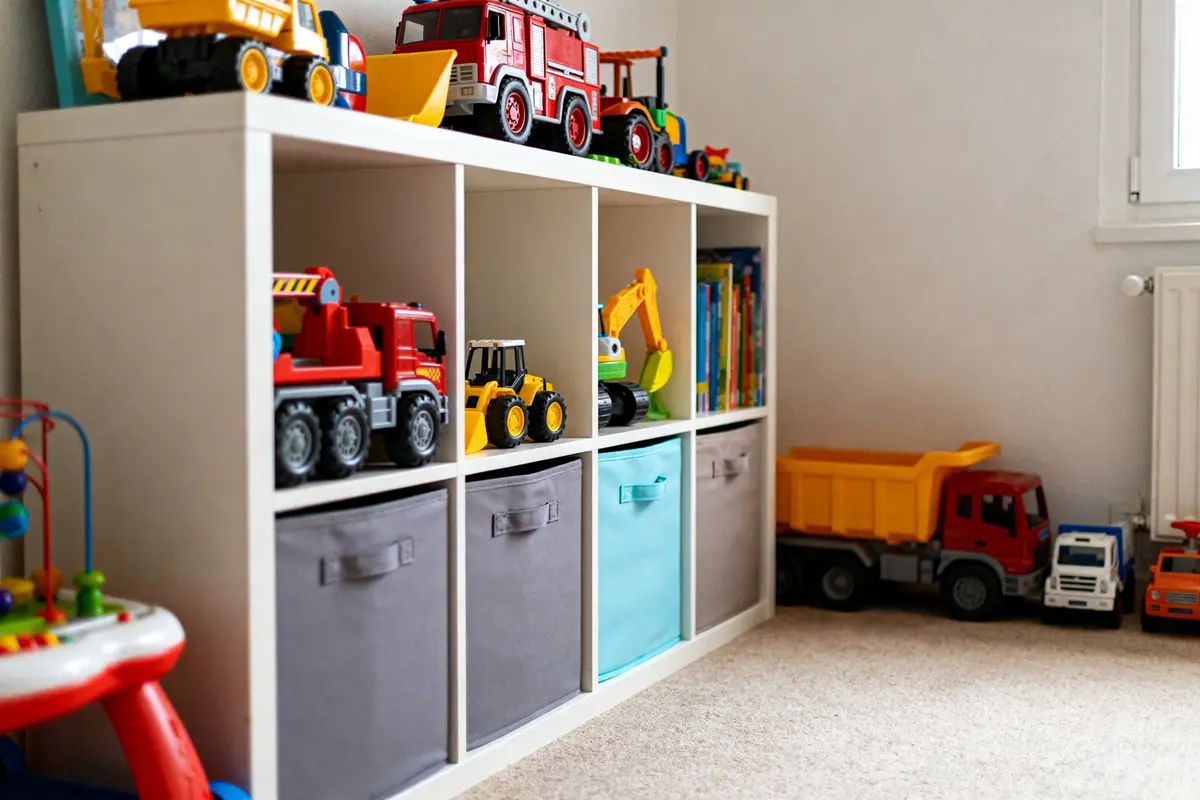
Modular systems, like cube organizers or stackable bins, are fantastic for adapting to a growing child’s needs. These systems let you combine different shelves and boxes to suit your space and the number of toys. You can add more boxes or swap them out easily as collections change.
Estimating storage needs can be simplified by measuring the number of children and their toys, then sizing storage units accordingly. For example, one standard cube can usually hold around 10–15 average-sized toys, which helps plan the number of cubes or bins required.
Benefits of modular storage
- Easy to clean and maintain
- Grows with your child’s interests and collection
- Allows for neat visual organization
- Facilitates sorting by category or age group
Fabrics and plastics used in these systems should be safe, durable, and easy to wipe clean. This ensures the longevity of the storage and maintains a healthy environment for children.
Le mot de l’auteur
« Opt for modular storage that encourages kids’ independence by being accessible and adaptable—it’s the key to a sustainable tidy play space. »
Smart storage ideas for rooms and small spaces
Using vertical space effectively
When floor space is limited, think upwards. Floating shelves, wall-mounted bins, and hanging organizers can turn unused vertical areas into efficient toy storage. Use bright colors and proper lighting to visually define these zones and make them welcoming, a technique often missed in small room setups.
Multi-functional furniture for compact living
Combine toy storage with pieces like beds with drawers underneath or benches with hidden compartments. This maximizes functionality without taking up additional space. Boxes tucked away under beds or inside ottomans can hold toys while remaining out of sight.
Opting for natural, sustainable materials in such furniture can improve air quality and reduce exposure to allergens for sensitive children, adding a safety layer often neglected.
Hide-and-seek storage: bins and seating
Storage bins disguised as furniture
Bins that double as seating or tables are brilliant for disguising clutter. Children can enjoy easy toy access while parents benefit from a neat living area. Look for bins with lids for a quick clean-up and a comfortable bench on top, ideal for playrooms or living rooms.
Color-coded bins for organization
Assign colors to bins to help kids learn where different toys belong. This simple system turns tidying up into a fun sorting game. Use labels or pictures for non-readers to identify their contents. This technique supports cognitive development and teaches responsibility.
Maintenance, rotation and tips to keep clutter under control
Regular decluttering sessions
Set a schedule to review toys every few months. Remove damaged or unused toys and donate those your children have outgrown. This habit prevents accumulation and keeps the storage manageable. Counting toys before and after these sessions helps estimate future storage needs and avoid overspending on furniture.
Toy rotation to reignite interest
Keeping only a portion of toys at a time while storing the rest away helps maintain a neat environment and keeps playtime fresh. Rotate toys weekly or monthly using labeled containers. This reduces the visual overload and makes each toy feel special again.
Simple daily habits for lasting order
- Encourage kids to put toys away immediately after playing
- Use storage solutions at child eye-level for better accessibility
- Involve children in storage decisions to promote ownership
- Clean storage bins regularly to avoid dust and dirt buildup
Implementing these guidelines will create an easy-to-maintain system and reduce the daily hassle of toy clutter.
🧮 Calculateur de capacité pour storing toys
Estimez combien de rangement vous aurez besoin selon le nombre d’enfants et la quantité de jouets.
FAQ — storing toys
How to store toys?
How to store toys involves using organized storage solutions like modular shelves, bins, and labeled containers. Grouping toys by category and keeping storage at child height encourages tidiness and easy cleanup after playing.
How to store lego?
How to store lego efficiently means using stackable bins or clear containers with labels to keep pieces sorted by type or color, making building easier and cleanups quicker, while protecting the small parts from being lost.
What are some cheap toy storage ideas?
What are some cheap toy storage ideas include using repurposed boxes, plastic bins, shoe organizers, and DIY shelving. Vertical storage and multi-functional furniture also save space and cost while keeping toys neatly stored.
Can toys cause autism?
Can toys cause autism? No scientific evidence supports that toys cause autism. Autism is a neurodevelopmental condition with genetic and environmental factors unrelated to toy exposure or types of playthings.
Why is toy rotation important?
Why is toy rotation important? Toy rotation keeps play areas tidy and maintains children's interest by limiting the number of toys available at once. It reduces clutter and makes each toy feel new and exciting again.
What materials are best for toy storage safety?
What materials are best for toy storage safety? Non-toxic, durable, and easy-to-clean materials like certain plastics and fabrics are ideal. They ensure hygiene, are safe for children who put toys in their mouths, and maintain a healthy environment.

Florence est musicothérapeute diplômée et passionnée de bien-être holistique. Après quinze ans d’accompagnement en cabinet et en milieu hospitalier, elle partage ici ses réflexions sur le pouvoir thérapeutique de la musique. Son approche bienveillante invite chacun à explorer sa propre mélodie intérieure.